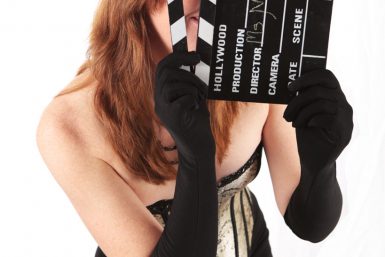
This great video details The Bechdel Test, which is a way of measuring how mainstream movies treat women. To pass the test, a movie has to:
(1) have at least two women in it, who (2) who talk to each other, about (3) something besides a man.
The test first appeared in 1985 in Alison Bechdel’s comic Dykes to Watch Out For.
This site has a growing list of films that do pass the test. Films from 2010 include: Toy Story 3, Sex and the City 2 and, perhaps surprisingly, The Karate Kid. What’s more interesting is applying the test to your favourite movies. It makes you realise that the male point of view has become so normalised that we’re often blind to the marginalisation of women in films. Worse still, this whole attitude seems to be entrenched in Hollywood and is actually taught in film schools.
The idea of applying the Bechdel Test to porn films seems almost ludicrous; porn films are usually about one or more women “discussing” a man, nice and hard. Still, it’s another useful way of revealing just how male-oriented most porn can be.
via Erika Lust.
In yet another example of their opaque censorship policies, Facebook has removed Violet Blue’s Our Porn, Ourselves page, even though it had over 3000 members and was obsessively policed by Violet. It seems the anti-porn zealots may have been behind it. Read more about it over at Violet’s blog.
Like other member’s of that group, I’m reposting Violet’s letter to Facebook, questioning the page removal. A shit storm is about to get started, folks. Will be interesting to see how FB reacts.
Hello,
I’m Violet Blue: bestselling and award-winning author, and educator who speaks from UCSF and UC Berkley (Boalt) to Google Inc. Tech Talks on my field of expertise — exactly what this Facebook group page was about.
My page did not violate any of the reasons stated for deletion. It was under constant attack by people who disagreed with our point of view, and constantly reported our posts and images, even though we were very careful not to violate your Terms. May I find out why the page was removed? It is my utmost priority to follow and uphold Facebook community rules and standards. With national media attention to the page, questions will be raised and I hope to be able to furnish answers. Especially with a higher minded page of over 3000 members seeking community and discussion around a topic that did not target any group, threaten anyone, or link/depict/suggest inappropriate content. In fact, I policed the posts hourly for spam and attacks on our members, of which there were many. We never posted obscenity in links or images, though innocent user photos seemed to be increasingly mysteriously removed.
I feel that our page was targeted, and that we did nothing to violate the community standards of Facebook, which we sought to uphold. Any help to find out why this has happened would be deeply appreciated. I do not want to be talking to press about this in the next few days and be left guessing. We sought a safe place to discuss sex culture in media, and that is all.
I sincerely hope we can resolve this. Salon and Examiner wrote about our page as a signifier of community organization around women’s empowerment, calling it a new movement for women’s rights. I could tell we were under attack by those who violently opposed our discussions and representation as a community intersection for enriched discussions about important women’s rights issues. This development is confusing and saddening.
This fostering of group community around female empowerment and the page topic stems from my work as a talkshow guest (Oprah), international conference speaker, and columnist for various national and international magazines and publications (Oprah Magazine, Forbes.com, MacLife, etc) and media pundit (Wall Street Journal, MSNBC, Esquire, Redbook, Wired, etc).
Please help me understand what I can tell media outlets asking about this, and the over 3K member we had in the page group.
Sincere thanks,
Violet Blue
It keeps popping up on TV talk shows and is used as a debate silencer by right-wing pundits. Religious groups use it to put pressure on politicians to create greater censorship. It’s the term “sexualisation of children” and I suspect that it’s bullshit.
I’ve been meaning to write a blog post on this for a while but today I’ve found that Australian researcher Catherine Lumby has pretty much summed things up. Catherine is part of a new research group called Onscenity which is looking at the new climate of sexual openness in the media and researching its effects – without the usual moral hysteria.
The Register reports on a recent conference held by the new group. I’m going to get a bit quote-happy with this as it has a lot to say:
The real problem, though, is that no one knows what “sexualisation” is: it is a convenient label used to position the child as always the victim, and then to pile every problem imaginable on top, including paedophilia, body image, sex trafficking and self-esteem. Once that particular juggernaut gets rolling, it is almost impossible to have a sensible debate about what’s really going on.
Too many so-called experts – most famously, Dr Linda Papadopoulos – were speaking well outside their field of expertise. Eating disorders get ascribed to “sexualisation”, despite the fact that most dietary experts would question that conclusion. Worse is the way in which this debate is almost always framed in moralising terms, and a key question must be what political motive lies behind such framing.
Equally of concern was the way in which “healthy sexuality” is so often equated to “non-commercial” – as though sex alone can be an activity free from all commercial influence.
[David] Buckingham’s contribution was echoed closely by Professor Catharine Lumby, Director of the Journalism and Media Research Centre at the University of New South Wales. She warned that a key driver to debate in this area is a parental view that “it must be possible to stop information getting out”. The current panic in Australia has its roots in a report – Corporate Paedophilia – which set the ball rolling in terms of claiming that children were being “sexualised”.
However, the report lacked all scholarship, being based on an inadequate sample, and contained no definition of sexualisation – or even what was meant by “child”. It was dominated by vox pop submissions from the Christian right, feminists and high-profile social commentators.
The entire debate was a trap, since as soon as someone declares an image erotic, it is then analysed in that context, as opposed to being viewed for whatever it is. In fact, Lumby suggested, it is arguable that analysing images by imposing an adult viewpoint on childhood activity is itself abusive.
Like Buckingham, Lumby felt that it was necessary to look at the political motives and context of the current panics. Buckingham suggested a concern with female working class sexuality, which was viewed as dangerous and in need of control. Absent from most debate was any view of boys or their sexuality, other than as a threat.
Lumby went further, expressing her utter surprise that some of the main proponents in this arena claimed the title of feminist, since in practice the whole debate was about policing how femininity should be performed. Moral critiques of imagery are highly normative – and therefore not in the interests of most women.
Finally, Clarissa Smith, programme leader of the MA media and cultural studies at the University of Sunderland, took issue with terms such as “pornification” and “pornographication” which, like sexualisation, are rarely defined, but assumed to be universally understood.
I do recommend you read the whole Register piece. I applaud these researchers for trying to see past the moralising bullshit and actually properly study this whole thing.
The word “sexualisation” really needs to raise a red flag because it is so regularly used by religious people, anti-porn feminists and conservatives. It’s a word that has an agenda behind it and it’s a word that is used to inflame emotion; it’s a “somebody think of the children!” diversion, a way to derail sensible discussion by creating fear.
The pic above is the book by Maggie Hamilton called “What’s Happening to Our Girls” which is often used to back up these moral panics (and it should be noted, Maggie Hamilton is a Christian who conducts “spiritual healing” workshops). I haven’t read it but I do have one critique already: the use of the words “our girls”. This book is saying that todays girls and young women are “ours”, not their own selves. Apparently it’s our job to make sure they conform to a certain sexual stereotype, one of virginity and “niceness”. The panic over “slutty” clothes, drinking and promiscuity is laden with expectations about how “our girls” should behave. We expect them to keep a social norm. “Sexualisation” is somehow breaking that norm.
The other thing about “sexualisation” is it assumes that children are sexless and that they should somehow be kept in a state of perfect innocence until they’re 18. Either that or there is a set age at which they should discover sex; “growing up too soon” indicates a standard that is not being met. And yet we know that children are sexual from the moment they are born and all children grow up differently. And, indeed, different cultures, societies and religions demand that this growing up occur at different stages. So “sexualisation” is also a culturally relative term.
One more thing that gets me about this particular moral panic: we see the “experts” calling for greater censorship of adult material (e.g. Australian group Kids Free 2 B Kids demanding that R-rated magazines like Playboy only be sold in adult shops) but they don’t seem to have a problem with “tween” magazines that encourage young girls to conform to a certain idea of femininity: fashion and makeup, to be specific. Surely teaching girls to paint their faces and obsess about the “right” clothes is teaching them to be sexual as well? Where are the calls to ban Dolly magazine?
If we are going to be concerned about “sexualisation”, where is the outrage over the “Shine” program, a fundamentalist Christian outreach program that is currently being introduced into Australian schools? The program sees older women teaching girls as young as 9 how to put on makeup and make themselves “nice” for the boys. It also re-enforces stereotypical gender roles and, of course, seeks to “bring girls to Jesus” through the wonder of fashion. We don’t see Kids Free 2 B Kids campaigning against that.
The question is, what is the “right message” about sex that girls and young women should be receiving? As a sex positive feminist, I’m always on the side of education, not censorship. You can’t blindfold kids or put them in a burka. They’re living in the 21st century and the media is part of their everyday lives. So, talk to them about it. Teach them how to interpret images and think for themselves. Encourage self esteem so they are more confident and able to cope with the conflicting information offered by advertising, TV, films, magazines and the internet. Don’t create expectations of rigid gender roles or physical or mental conformity.
And don’t react with panic when the topic of sex comes up. If there’s one thing that is GUARANTEED to harm kids and teenagers with regards to sex, it is negative parental attitudes and a repressive home environment. Indeed, it’s entirely possible that the ongong drama about “sexualisation” is actually doing more harm than good.
Update 22nd July
Dr Petra Boynton has written an excellent post called Sexualisation of Young People report released. How useful are the findings? Here’s your chance to find out. She urges the media and anyone else who’s interested to read the reports and take the time to analyse the findings. There’s a lot of reading to be done but Dr Petra does make an interesting summary of the Scottish research which seems to have started from a less biased background. Maybe it’s confirmation bias but this paragraph stood out at me:
‘Sexualisation’ is not an issue that immediately worries parents or teens, but when prompted it seems parents are far more worried about it than young people, and are often more concerned about the sexualised behaviour of other children rather than their own child. Indeed their work suggested a lot of parental anxiety over Sexualisation manifested itself in parents talking about how girls should behave and act in appropriate and modest fashions. Young people, meanwhile, seemed more aware of the media and potential sexualising influences than expected, although the authors acknowledge there are still issues about sexuality needing addressing. In short they concluded sexualisation is a complex issue that can’t be fixed with simplistic suggestions for policy change.
It does seem to be a feature of much of the discussion about “sexualisation” that young women are assumed to always be victims without any agency or media savvy whatsoever. It’s obviously a flawed idea, especially when so many young people are completely immersed in their own media environments and aren’t wide-eyed babes in the woods. One of the wonderful things about the internet is that is that it has been able to provide a wealth of educational content about sex and also a wide variety of opinion and criticism of mainstream culture.
As always, education and critical thinking are the key.
Violet Blue has announced the winners of her video contest at Our Porn Ourselves. Lexi Love’s discussion of porn in Times Square came first and the Ursulaorelse’s video (above), which I really like, came second. Ursula’s movie is short, sweet and does an excellent job of getting the message across.
For The Girls was a sponsor of the contest. It’s great to see so many women come out in support of our right to enjoy sexually explicit material.
I need to say something. Something that’s pretty obvious really: I’m a capitalist. I make porn to make money. It’s how I earn my living.
And it seems that some would argue that because I’m trying to make a profit from porn, this immediately means that anything I have to say on the topic of censorship or feminist porn is therefore tainted or hasn’t any weight. I got this aggravation from a certain angsty and light-on-for-facts female blogger last year and I’m feeling it again in the wake of the Our Porn, Ourselves conversation.
Audacia Ray, who I very much admire and respect, wrote this in her piece about the current stoush:
…there are plenty of people involved in the mainstream hetero porn world who are proponents of free speech being generously applied to the adult industry (dicey legal construction of “obscenity” be damned!), but their commitment to free speech is more about protecting their business interests than being renegade First Amendment advocates. Violet is very much not one of the motivated-by-porn-profit people, her interest in porn is actually about having an interest in the sexualities of women.
Audacia’s dichotomy makes me rather uncomfortable. It suggests that any effort to protect free speech should be somehow pure and untainted by the profit motivation. It’s a troubling assertion because it seems to suggest that those of us making a living from porn and protesting censorship (as I do regularly) are only motivated by a desire to protect an income stream. That’s a little too black-and-white for my liking.
Yes, I hate the idea of censorship because it means I wouldn’t be able to earn a living making porn. But that’s not the only reason, nor is it the biggest motivation. I hate it when other people tell me what I can and cannot read, see, hear, film or say. It offends me as a human being. Running a commercial adult business does not change that motivation. And I don’t doubt that John Stagliano, who is facing obscenity prosecutions, feels the same way.
The same applies with regards to the discussion of adult material, what it means and whether it may be a problem in our society. I’m a webmistress who is part of the adult industry but that doesn’t mean I don’t strongly believe in the ideals of feminist porn or automatically reject any valid criticism of porn. Yes, I have commercial issues to consider but it doesn’t negate my ideals or determination to make porn better. I’m not a saint, but then, is anybody?
Gail Dines, the organiser of the Stop Porn Culture conference, has dismissed me, Violet Blue and any other women who enjoy porn thusly:
“Women defending porn are likely deluded by the near trillion dollar industry.”
Ah, false consciousness is fun, isn’t it? You can dismiss almost anything by patting the other person on the head and telling them they “just don’t understand.”
I’m not deluded. I’m also not engaged in a purely cynical exercise just to make a buck in this alleged “trillion dollar industry”. If I were, I would have been selling Jenna Jameson products from the moment I started, not making porn for women like myself.
And I seriously doubt that all the women who are coming forward to defend the idea of freedom of speech and sexual expression aren’t just dupes of the evil porn industry. No doubt most of them have spent time thinking about porn and also struggling with the idea that women aren’t supposed to like it, on top of fact that so much of it is just plain bad. A woman who is brave enough to say she likes porn has given the issue some serious thought.
Unlike Boston Herald columnist Margery Eagan who happily wrote an entire column supporting the anti-porn conference without bothering to do a skerrick of research.
In any case, my point is this: Yes, I’m a capitalist but I also care deeply about feminism and freedom of speech. And I think that one should not preclude the other.
I want to say thanks to Violet Blue for working her butt off over the last couple of days, organising a new pro-porn group that she’s called Our Porn, Ourselves.
Violet was spurred into action by news of an anti-porn conference to be held in Boston by the Stop Porn Coalition, an organisation that calls itself feminist but in fact has hidden fundamentalist Christian roots. This “conference” is long on speakers who condemn porn but pretty short on alternative views or real science. They’re happily pushing the “porn addiction” paradigm which is, as I’ve previously said, bullshit.
Also this group were happy to make use of extreme hardcore images in their presentations without checking the age of viewers or obtaining 2257 records. Most of the images were taken from online sites without attribution. I recommend you read Violet’s article from 2008 for more information about this organisation.
I’m completely in support of Violet’s efforts to counteract the “Feminists Against Porn” (FAP) argument. Too much of it is based on dodgy science, hysteria and a real misunderstanding of sex and gender relations. Throw in a dash of religious fundamentalism and you have a dangerous ideology. And I think one of the worst effects of their Chicken Little crap is that this stuff gets in the way of real discussion about porn and what it means.
I call myself a feminist and I like porn. And yet I do have problems with a lot of the porn out there. I think we need to be talking about it and thinking about how to make porn better without it turning into a “them versus us” war. Unfortunately, the way this conference is framed, there’s no room for questioning the anti-porn line.
This new movement is a way for sex positive women to stand up and tell that world that not all feminists accept the Dworkinesque arguments pushed by these puritans. And I think it will also give us an opportunity to start a real dialogue about what we really want from porn.
So I’m standing behind Our Porn, Ourselves and For The Girls is sponsoring the film competition.
Please also check out Violet’s Facebook page for the movement (at least, until FB gets puritanical and takes it down).
You might also want to read a few of my previous posts about porn, feminism and “porn addiction”
Naomi Wolf talks porn… again
This load of guilt and shame brought to you by Dirty Girls Ministries
Here’s the little image I made for the campaign:

Just a quick post to draw your attention to Why feminism must embrace reason and shun religion, an excellent article that questions the feminist movement’s apparent “blind spot” when it comes to religion, especially given the appalling sexism that exists in almost all religions, especially the monotheistic ones.
It seems to me that some feminists are afraid of a critical discussion about religious faith, because of the ever-looming label of ‘intolerant’, ‘prejudiced’, or, when it comes to any religion besides Christianity, ‘racist’. When in fact, there is a big difference between questioning an idea (in this case: faith in the existence of a specific supernatural entity in spite of a complete lack of evidence) and hating a person or group of people. Saying that critics of religion are prejudiced is as moronic as calling feminists ‘man-haters’.
It’s a very good point. I think this desire to be tolerant is actually doing harm; it means that feminists aren’t speaking out loudly enough when it comes to the treatment of women within Islam, to use only one example. It’s this relativism that sees some people defending female genital mutilation or violence against women because it’s part of someone’s “culture”.
Human rights trump culture and religion every time. If feminism is truly about giving women equal rights and choice, it needs to remember that.

This is an ad from Egypt encouraging women to cover themselves to prevent rape (via this post at Pharyngula?.
That’s right girls, if you’re raped, it’s your own fault for being uncovered and letting the flies stick to you. Never mind the education campaign telling men that rape is bad. Responsibility and honour lies with women.
I’ve stated before that I think religion is responsible for oppressing women and Islam is one of the worst offenders. This is just a further example. It’s similar to statements made a couple of years ago by a Sydney imam who compared unveiled women to “uncovered meat” which is available to the cats.
Islam is obsessed with sexuality. It defines all contact between men and women as being sexual. There’s no such thing as a platonic friendship in this religion. Women are defined according to their bodies and their sexual availability. Men are considered to be beasts with uncontrollable desires. If a man rapes, it’s the woman’s fault for being “too tempting.” I find the whole philosophy to be abhorrent and degrading to both sexes.
There is a debate going on at the moment about the banning of the burqa in Belgium and France. I support the ideals behind it but I think it will ultimately do more harm than good. Education, not prohibition, is the way to go.
Today in the Sydney Morning Herald there’s an opinion piece called The Burqa is an Affront to Feminism, arguing for a ban in Australia. The writer goes astray when ranting about “teenagers today” but she makes a few good points. Unfortunately she doesn’t address this basic issue of sexuality within Islam that creates the whole dilemma.
The comments are running hot. Among them someone has posted the manifesto of the Council of Ex-Muslims in Britain. I really like what they have to say so I’m reposting it here.
1. Universal rights and equal citizenship for all. We are opposed to cultural relativism and the tolerance of inhuman beliefs, discrimination and abuse in the name of respecting religion or culture.
2. Freedom to criticise religion. Prohibition of restrictions on unconditional freedom of criticism and expression using so-called religious ’sanctities’.
3. Freedom of religion and atheism.
4. Separation of religion from the state and legal and educational system.
5. Prohibition of religious customs, rules, ceremonies or activities that are incompatible with or infringe people’s rights and freedoms.
6. Abolition of all restrictive and repressive cultural and religious customs which hinder and contradict woman’s independence, free will and equality. Prohibition of segregation of sexes.
7. Prohibition of interference by any authority, family members or relatives, or official authorities in the private lives of women and men and their personal, emotional and sexual relationships and sexuality.
8. Protection of children from manipulation and abuse by religion and religious institutions.
9. Prohibition of any kind of financial, material or moral support by the state or state institutions to religion and religious activities and institutions.
10. Prohibition of all forms of religious intimidation and threats.
A couple of years ago I expressed disappointment that Naomi Wolf had come out and declared “modesty” in the form of religious veiling to be feminist. Before that I was sick of her endlessly recycled article on porn.
Now she’s touring Australia and is once again talking porn, this time in an interview in the Sydney Morning Herald. I waded in, begrudgingly and emerged with mixed feelings about what she had to say.
Put briefly, Naomi Wolf still thinks porn is bad, mmmkay. Her reason for this is that “it’s definitely affecting young women and men’s sexual development deeply, deeply, deeply.” She argues that seeing porn from an early age is changing the way young people have sex and that it is not encouraging women to embrace their sexuality properly. She bases this mainly on anecdotal evidence, tales of female students fronting up to doctor’s offices with anal fissures after a first date. She says: “Young women do compare themselves to pornography and they do have porn running in their heads when they’re in sexual situations. I’m not a prude, but I don’t think that’s good for their sexual confidence or confidence in their bodies.”
I’m conflicted about these kinds of statements because I do acknowledge the concern there. Mainstream porn can send a lot of negative messages about body image and sexuality and we need to be talking to young people about it.
What I’m uncertain about is whether all these frightening anecdotal stories of girls being fucked over by ignorant porn-loving guys are true on a large scale. Are young people really imitating what they see in porn? Have anal and facials really become de-rigeur? Or are today’s young people actually more sex-, tech- and porn-savvy than that? Where’s the actual research?
One of the things that’s never mentioned during these “teens look at porn!” panics is the idea that, alongside all that easy access to porn is a simultaneous easy access to information. Girls in my day (and Naomi’s) weren’t able to find porn within a few keystrokes but we also weren’t really able to easily find information about sex. Cosmo “101 positions” articles and Dolly sex advice columns were about the best we could do.
Now things are different. Your average teen can easily look up information on any aspect of sex (type “sex advice into Google”). There is a vast amount of sexual information available on the internet, including sites like Go Ask Alice and Scarleteen that are specifically focused on young people. Add to that the many feminist sites discussing porn and sexuality and even sites like Make Love Not Porn which seeks to counter misconceptions about sex and porn.
So while I’m happy to acknowledge that it’s a problem if teens are using porn as sex education, I’m wondering if they’re really the startled ingenues everyone assumes them to be.
And I guess the question is: if we are worried about how young people use porn, what’s the response? I’m all for education and communication, talking about sex and the way that sex is depicted in porn and in society as a whole. Naomi’s solution, unfortunately, is abstinence:
Research shows that pornography desensitises; if you consume it a lot, you need more or more extreme or more and more intense images in order to get the same sensations over time… The best thing we can do is try to persuade young women and men that it’s not good for their sex lives, it’s not good for their self-confidence, and they’ll have better sex if they choose not to let this stuff shape their sense of sexuality.
My question is: what research? Are we talking the same research done by those earnest Christians who are out to prove that porn is “addictive”? Because their philosophical position and Naomi’s end up in a similar place: Porn is bad, mmmkay. (See my previous post on Dirty Girls Ministries to see just how similar their arguments can get.)
Naomi was asked about where non-mainstream and queer porn fits in. Interestingly, she acknowledges that some porn can be liberating and self-affirming but then she quickly skirts around the issue, returning to her main argument that it is desensitising. It’s not surprising she brushes past the topic because I think it’s one of the great sticking points in her case.
There are plenty of people who are enjoying non-mainstream porn and discovering new aspects of their sexuality through erotic imagery and writing. Porn can revive relationships and help women to orgasm for the first time. It can showcase different sexualities, different body types, different techniques and different experiences and this can be very reassuring to see. Porn like the films of Tony Comstock can also affirm the beauty of the sex act and the way it expresses love and intimacy. I simply can’t accept that fact that porn is, in essence, a completely negative thing that will always impact badly on a person’s sexuality. This assertion is just not true.
It really keeps coming back to the idea that porn is this giant, heterogeneous thing, something that only ever shows hetero sex where the woman is submissive or abused. Sure, there’s far too much of that out there and we do need to be talking about it and discussing its merits or lack thereof. But to dismiss the whole idea of porn as automatically damaging is far too simplistic an argument.
On Saturday the 10th in Toronto, Good For Her announced the winners of the 2010 Feminist Porn Awards. They are:
Best Bi Movie – Fluid: Men Redefining Sexuality | Madison Young | Reel Queer Productions
Hottest Dyke Movie and Hottest Kink Movie| River Rock Women`s Prison | Kathryn Annelle | Triangle Films
Most Deliciously Diverse Cast | Dangerous Curves | Carlos Batts | HeartCore Films
Hottest Feature Film | The Band | Anna Brownfield | Hungry Films
Most Tantalizing Trans Film | Speakeasy | Courtney Trouble| Reel Queer Productions
Sexiest Short | Handcuffs | Erika Lust | Lust Films
TheSmutty Schoolteacher Award for Sex Education | Tristan Taorminos Expert Guide to Anal Pleasure for Men | Tristan Taormino | Vivid Ed and Smart Ass Productions
Best Direction | Des Jours Plus Belles Que La Nuit | Jennifer Lyon Bell & Murielle Scherre | Blue Artichoke Films + La Fille’ D’O
Sexiest Straight Movie | The Deviant | Nica Noelle | Sweet Sinner Video
Good Releasing Emerging Filmmaker Award | Tobi Hill-Meyer
Heartthrob of the Year | April Flores
The Boundary Breaker | Jiz Lee
The Visionary | Shine Louise Houston
The Trailblazer | Tristan Taormino
Hottest Website: Rubysdiary.com
Honorary mentions
Dirty Diaries: 12 Shorts of Feminist Porn
Women Love Porn
Sensual Massage for Pregnancy
Cocksucker
Congratulations to all the winners. You’ll find more info about them and their films on the GFH website.
For The Girls was nominated for Best Website but I’m not really surprised we didn’t win. Maybe when this bastard of a new member’s area is done and we are finally able to forge ahead with all our plans for new content… next year we’ll get the gong. And even then if we don’t, not to worry. To me, seven years of amazing success and happy members is reward enough.
Edit 13th April: Here’s a couple of news stories:
The New Pornographers – Torontoist
San Francisco’s 2010 FPA Winners – The Examiner
Beyond that, there wasn’t much press coverage.
I’m a very grumpy blogger this week, as you’ll know if you’ve been reading my Twitter stream. I had every intention of flying to Canada to finally attend the Feminist Porn Awards this year. I’ve supported the awards since the very beginning and wanted to be there, especially as For The Girls is nominated for best website.
Alas, our best website is what has kept me here. I’m now into the 5th month of a long running battle with a design company to re-do the FTG member’s area. I won’t go into details; suffice to say it’s a cluster fuck. Trying to get it finished has kept me here. And my goodness, it’s made me very unhappy.
Still, I thought I’d best do a blog post and add a few links to some of the pre-show press given to the awards this year.
The best in feminist porn is an overview from Xtra which is Canada’s gay and lesbian news.
Tristan Taormino: A pioneer in porn is an interview and feature of the direct by the same site.
The Feminist Touch – an overview in Varsity.ca
Feminist porn awards selects New Zealand films – a report on NZ director Astrid Glitter’s 2 nominations. Astrid is attending the awards.
Porn reporter Gram Ponante has a sly interview with Alison Lee here.
So best of luck to all the nominees. Wish I could be there. Dammit.
You may have noticed that my blog was kinda dead for a week. That’s because I’d tripped off to Melbourne to attend the Global Atheist Conference.
I wasn’t going to write about it on this blog. After all, it should be about porn, right? And I don’t want to alienate any of my readers who may be religious in their own way. But I feel the need to have a bit of a ramble about myself and what I experienced at the convention because it touches on the two things that define this blog: feminism and porn.
As a teenager I was a Christian but we never went to church. My family were very liberal in their beliefs and we didn’t go in for all the hymn-singing and praying stuff. As the years went by I whittled down my idea of religion into a fairly nebulous blob of “spirituality”. I thought that I’d probably go to heaven when I died because I was nice and surely God would see that. Beyond that, I didn’t think about it much. I’d read my bible, knew a lot of it was horribly violent and nonsensical but figured I liked the philosophy of Jesus. He was a good guy, like Ghandi. Still, I had serious problems with his followers and their idea of morality, particularly sexual morality.
It all changed when I read the God Delusion last year. I couldn’t fault the argument of Richard Dawkins against the existence of God/gods. I realised that I was actually an atheist but I hadn’t really examined my beliefs properly up until that point. It was confronting to realise that yes, I was going to die and that would be the end of me. At the same time, that realisation is rather freeing. I’ve got one life, I need to make the best of it. When I die, my non-existence will be exactly the same as it was before I was born.
SO… what’s this got to do with porn and feminism?
Fact is, religion is a major factor in the way we approach sex and gender. Unfortunately, the impact of religion on sexuality has been largely negative. The Christian/Jewish/Muslim view of sex as being sinful and dirty informs how we construct our own sexuality; it shapes what we find to be sexy. The idea of women as either Madonnas or whores is reflected in porn’s treatment of women.
You see the results in the very language of porn: how women are sluts and whores, how porn titles often use the words sinful, secret, dirty, filthy. I’ve seen people say that sex is best when it’s dirty. There’s so much guilt and shame surrounding the act that we rope in these emotions and fetishize them. The result is sexual expression that is often problematic, sexist, unrealistic and demeaning.
On top of that, so much of the opposition to porn comes from religious people and is informed by a religious morality that dictates a very narrow view of sexuality: that monogomy is the only acceptable form of relationship; that homosexuality is wrong; that “promiscuity” is sinful; that certain sex acts such as anal sex are evil; that masturbation is harmful. The push to label all porn as “addictive” has its roots in the desire of some religious people to control the sex lives of others.
Similarly, I find that the lives of women the world over are negatively affected by religion. All the monotheistic religions, Hinduism and even some strands of Buddhism teach that women are inferior. The entire basis of Islam seems to rest on the idea that men cannot control their sexual desires but it is women who are responsible for the sexual behaviour of men. Across the world oppression, violence and rape are regularly perpetrated against women in the name of God.
One of the best things about the atheist convention was that it was openly feminist. There was no animosity towards the concept of feminism whatsoever. The equality of men and women was accepted as self evident by everyone there. It occurred to me that I’ve rarely felt so comfortable with expressing feminist ideas. There was no animosity, no nervousness from the guys, no hesitant expressions of “I’m not a feminist but…” It was all relaxed and intelligent. Imagine how far we could get if all discourses on feminism were like that?
One of the highlights for me was the speech by Bangladeshi author and feminist Taslima Nasrin who is currently in exile from her home country and under the threat of several fatwas from Islamic fundamentalists. She was forced out of India in 2007 because she dared to write an article criticizing the burka and the way women are treated by Islam. She said: “Religion is made for the pleasure and comfort of men. I don’t know why any woman would subscribe to it.” For her, there is no compromise between Islam and feminism. She believes that a woman who wears the veil cannot call herself a feminist because she hasn’t properly analysed the religion that seeks to oppress her. This is from a woman who was brought up as a Muslim.
As she described the pain of living in exile and the constant fear of assassination, I blinked back tears. The audience gave her a standing ovation. Here is what feminism is really about, I thought. Here is a woman risking death in order to speak her mind, speaking out against women’s oppression.
And then I thought, I’m a feminist because I’m an atheist and I’m an atheist because I’m a feminist.
At the convention, we discussed a lot of things: philosophy, ethics, evolutionary biology, science and politics. While there was a huge diversity of opinion on show, one thing we all agreed on is the idea of a secular society. Church and state need to be separate. Political action should be based on evidence and reason, not personal belief.
Everyone has the right to their own religion (or lack thereof) but they should keep it to themselves. When we start telling each other how to behave according to religious beliefs, conflict and oppression are the inevitable result.
Every day I see examples of the way that religion is exerting too much influence on our society and causing harm. The bans on gay marriage, the growth of abstinence-based sex education in the US, the Catholic church’s sex abuse scandals, the Pope saying that condoms are not the answer to AIDS, the plan to censor the internet in Australia, the ongoing oppression of women in Saudi Arabia and Afghanistan and Iran, the widespread practice of female genital mutilation, the attacks on reproductive choice and the right to abortion for women, the tax-free status given to churches so they can prosletyse, the death threats against those who speak out against Islam. The murder of Dr Tiller. The whole Arab/Israeli conflict. 9/11… I could go on.
Because I oppose these things, I’m an atheist. And it’s part of my larger philosophy, one that includes feminism and what the psychologists stupidly call “erotophilia” – an enjoyment of sex without shame. I’m also a humanist; I believe in a secular society, freedom of speech and universal human rights.
I hope that there are religious people out there who also believe in these things and will stand up for them. In that we have lots of common ground.
I hope this post hasn’t put off any of my readers; I realise this is one of those issues that can be confronting and I certainly didn’t want to upset anyone with it. Rather, it’s simply a statement of where I’m at right now, and why I felt it important to attend that convention.
I think that the path to atheism is a very personal thing; you can’t really “convert” people to this way of thinking. They have to be ready to go there themselves. There’s no dazzling miracles on display, no mystical experiences to be had. Only the wonder of the physical universe and life on Earth and a sense of amazement at the improbable fact of your own existence.
Now, back to your regularly scheduled porn.
I’m a little late with this news: British porn film director Anna Span, now going by her real name of Anna Arrowsmith, is running for parliament at the upcoming British elections, due to be held in May. Anna is standing as a candidate for the Liberal Democrats party in her home electorate of Gravesend.
It’s perhaps not surprising that the mainstream media have leapt on the story with a vengeance. A few of the articles reporting her candidacy:
Would-be MP: I’m proud of my porn films – Independent
Porn career? It won’t worry my collegues says Anna Arrowsmith – Times Online
Sex movie boss Anna Arrowsmith porn-again Lib Dem – The Mirror
Nick Clegg defends former porn director Anna Arrowsmith – The Guardian
Anna has had her own say here:
Why I’ve gone from porn to politics – Anna’s piece in the Guardian
The comments are pretty sarcastic, unfortunately.
I met Anna in Berlin last year and have reviewed several of her films. While they’re not necessarily my thing, I’ve long considered Anna to be a pioneer of feminist porn and worth supporting. Her fight against the UK classification board over female ejaculation showed her determination to stand up for women’s rights.
I think she’s going to face a baptism of fire by putting herself out there like this; she’s very brave. I applaud her tenacity and determination to follow through with her beliefs and I hope she does well. Who knows, maybe she’ll get in and show the conservatives in the UK that not everyone is as uptight about sex as they are.
I’m now wondering… is this it for Anna Span the porn director and Easy on the Eye? Anna has started a new line called “Women Love Porn” which features other directors. Perhaps she’s settling into the background now.
Good For Her have announced the official list of nominees for the 2010 Feminist Porn Awards. I’m pleased to say that For The Girls has been nominated for Best Website.
Here’s some info from their press release:
But wait, what is feminism doing getting into bed with porn? At Good For Her, we are feminists and we sell and rent porn. In 2006 we decided that it’s not enough to criticize adult films for not adequately representing women’s – and in many cases, men’s – sexuality. So we decided to do something about it. As porn star and performance artist Annie Sprinkle famously said, “The answer to bad porn isn’t no porn…it’s to try and make better porn!” Good For Her couldn’t agree more. We believe the world is inundated with cheesy, cliche, degrading, and patronizing porn. But we also believe that erotic fantasy is powerful, and that women and marginalized communities deserve to put their dreams and desires on film, too. As feminists and sex-positive people, we want to showcase and honour those who are creating erotic media with a feminist sensibility.
The nominees on this year’s list continue to strive to provide erotic entertainment that is smart, sexy, and continues to appreciate women as viewers. In addition to featuring 51 nominations in total – the highest number of nominated films and websites ever – this year’s nominee list also includes movies from more countries than previous years, and includes filmmakers from: Great Britain, Spain, The Netherlands, France, Sweden, Australia, New Zealand, and of course, the porn epicenter of the world, The United States. Canada is also represented among the nominee list with erotic website, GoodDykePorn.com, and “Kiwi-Canuck” Astrid Glitter.
The Nominees for the 2010 Good For Her Feminist Porn Awards are (in alphabetical order – film title first)
48) 101 Positions for Lovers – Jamye Waxman – Sensual Couples
49) A Man With a Maid: Tales of Victorian Lust – Nica Noelle – Sweet Sinner Video
50) Art of Female Self-Pleasure – Jaiya – New World Sex Education
51) Be My Boy Toy – Anna Span – Easy on the Eye Productions
52) Behind the Red Door – Carlos Batts – HeartCore Films
53) Bordello – Courtney Trouble – Reel Queer Productions
54) Buck Angel’s Ultimate Fucking Club – Buck Angel – Buck Angel Entertainment
55) Cocksucker – Julie Simone – Julie Simone Productions
56) Couch Surfers 2: Trans Men in Action – Brazen Garage Squad –Trannywood Pictures
57) Crash Pad Series 4: Ropeburn – Shine Louise Houston – Blowfish Video
58) Crash Pad Series 5: The Revolving Door – Shine Louise Houston – Blowfish Video
59) Dangerous Curves – Carlos Batts – HeartCore Films
60) Des Jours Plus Belles Que La Nuit – Jennifer Lyon Bell + Murielle Scherre – Blue Artichoke Films
61) Dirty Diaries: 12 Shorts of Feminist Porn – Mia Engberg (producer) — Njuta Films
62) Fluid: Men Redefining Sexuality – Madison Young – Reel Queer Productions
63) Fluid: Women Redefining Sexuality – Madison Young – Reel Queer Productions
64) Glamazons – Carlos Batts – HeartCore Films
65) Handcuffs – Erika Lust – Lust Films
66) Honey Bunny – Vena Virago – Vivid Alt
67) John — Astrid Glitter– Glitter Films
68) Lesbian Adventures: Victorian Love Letters – Nica Noelle – Sweetheart Video
69) Lesbian Hitchhikers – Nica Noelle – Sweetheart Video
70) Maneater: The Prelude – Damali Dares – Desire Street Productions
71) My Daughter’s Boyfriend – Nica Noelle – Sweet Sinner Video
72) Penny Flame’s Expert Guide to Rough Sex – Tristan Taormino & Penny Flame – Vivid Ed/Smart Ass Video
73) Perversions of Lesbian Lust Vol. 2 – Madison Young – Madison Young Productions
74) Queer Manor – Madison Young – Reel Queer Productions
75) River Rock Women’s Prison – Kathryn Annelle – Triangle Films
76) Rock Hard: For Music and Cock Lovers Everywhere – Jelena Lakic – Easy on the Eye
77) Roulette: Berlin – Courtney Trouble – Reel Queer Productions
78) Sensual Massage for Pregnancy – Jaiya – New World Sex Education
79) Seven Minutes in Heaven: Coming Out – Courtney Trouble – Reel Queer Productions
80) Seven Minutes in Heaven: Tender Hearted – Courtney Trouble – Reel Queer Productions
81) Speakeasy – Courtney Trouble – Reel Queer Productions
82) Stories of Sexes – Ovidie & Jack Tyler – French Lover TV
83) Sylvia – Madison Young – Madison Young Productions
84) The Band – Anna Brownfield – Hungry Films
85) The Deviant – Nica Noelle – Sweet Sinner Video
86) Tristan Taormino’s Expert Guide to Anal Sex for Men – Tristan Taormino – Vivid Ed/Smart Ass Video
87) Tristan Taormino’s Expert Guide to Threesomes – Tristan Taormino – Vivid Ed/ Smart Ass Video
88) Tristan Taormino’s Rough Sex – Tristan Taormino – Vivid / Smart Ass Video
89) Women Love Porn – Anna Span (producer) – Easy on the Eye Productions
90) Women Love Porn: Apocalypse Angels – Katie Coxxx – Easy on the Eye
91) XXX Vignettes – Astrid Glitter – Glitter Films
Website Nominations:
www.RubysDiary.com
www.JuicyPinkBox.com
www.ShotWithDesire.com
www.NoFauxxx.com
www.GoodDykePorn
www.ForTheGirls.com
www.OnMyPeriod.com
Congratulations to all the nominees. There’s a lot of great films in there and also some new ones I haven’t heard of; I’ll have to look into where I can get them for review.
I’m not certain but I’m hoping to be able to attend this year’s awards. It will be a bit last-minute if I go but I’m sure it will be worth it.
This morning I read an opinion piece by Natasha Walter in The Times Online called How Teenage Access To Pornography Is Killing Intimacy In Sex. The headline is pure moral panic but I was surprised to find that this extensive article actually contained a real attempt to be vaguely balanced in its anti-porn argument. Normally these kinds of pieces are all hysteria and generalisations and Dworkin-style feminism. This one went close to that but then tried a bit harder. These paragraphs were what gave me pause:
Now that the classic feminist critique of pornography — that it necessarily involves or encourages abuse of women — has disappeared from view, there are few places that young people are likely to hear much criticism or even discussion about its effects.
Many women who would call themselves feminists have come to accept that they are growing up in a world where pornography is ubiquitous and will be part of almost everyone’s sexual experiences. I can see why some are arguing that the way forward really rests on creating more opportunities for women in pornography, yet I think it is worth looking at why some of us still feel such unease with the situation as it is now.
I do not believe that all pornography inevitably degrades women, and I do see that the classic feminist critique of pornography is too simplistic to embrace the great range of explicit sexual materials and people’s reactions to them. Yet let’s be honest. The overuse of pornography does threaten many erotic relationships, and this is a growing problem. What’s more, too much pornography does still rely on or promote the exploitation or abuse of women. Even if you can find porn for women and couples on the internet, nevertheless a vein of real contempt for women characterises so much pornography.
It’s very rare that writers actually acknowledge the existence of alternative porn such as the stuff I make. And I find that rather pleasing because it means they can’t get away with the “all porn is bad” or “all porn hurts women” nonsense. They also can’t then start arguing for censorship because they’re aware it would harm sex-positive erotic expression.
And the fact is that I too have major concerns about the ongoing misogyny and negative attitudes that pervade mainstream porn. I too wonder what it’s teaching young people and whether it’s reinforcing sexism or making guys into bad sexual partners.
My problem, though, is with the assumption that this is absolutely and definitely happening to a large number of men. And the reason I have a problem with it is because there is no scientific evidence to back up that claim. In the article Natasha writes:
For a long time I was sceptical about the claim that the internet had really changed people’s access and attitudes to pornography. Those who want it have surely always been able to find it, whether they were living in 5th-century Athens or the 1950s. But the evidence (my italics) has convinced me that the internet has driven a real change for many people, especially younger people.
She then goes on to quote statistics about how many teens and men are using porn but she fails to then offer any proof that the use of porn is then causing harm.
And that’s the real problem with these kinds of articles. The writer can come up with numerous individual anecdotes that back up their point (in this case, a lengthy interview with “Jim” who became obsessed with porn as a teen) but there’s no real, proper research offered to back up those individual cases.
I too find it disturbing when I hear of women saying their partners became crap in bed after they’d gotten a little too interested in mainstream porn… but can that be extrapolated into a wider trend within the male population?
Fact is, no huge studies have been done to prove it. And here’s the other problem: you’re gonna need a seriously massive study to see any kind of trend. Because the internet means that everybody looks at porn now and if you then think about whether this ubiquitous thing is having a visible, quantifiable effect on vast numbers of men… well, I just don’t see it. In theory we should be witnessing the wholesale destruction of relationships, increasing sexism in our everyday interactions, major psychological problems becoming commonplace among men but it’s just not there.
Instead you could point to the studies that show incidences of rape and sexual harrassment fell in the last ten years. Or even the recent very small survey in Canada that sought to answer these very questions. The researcher originally made headlines because he was unable to find any men who didn’t use porn for his control group. But he did discover that the men in his study watch porn with a cynical eye and that it doesn’t lead to criminal behaviour.
Thus, I don’t really buy into the argument that mainstream porn is making men into complete bastards even if it does make some kind of logical sense. And yet I do want to continue the discussion about what meanings mainstream porn IS constructing and what it means for teens who are, unfortunately, getting their sex education from porn. I’m all for talking about what’s wrong with the depictions of women and sex and advocating for a more positive portrayal of sexuality.
And I’m certainly keen on bringing men into the conversation and hearing what they think about it. Because too often articles like Natasha’s make generalisations about “what men think” without recourse to actually asking them. I actually like to hope that most guys do take porn with a grain of salt, aware that it often appeals to negative emotions or base impulses. And perhaps if we can get that discussion going, more men’s consciousness can be raised to the point that they’re aware of the problematic nature of mainstream porn.
Education and communication is the solution to this puzzle. It always is.
For another view on this, please read The Thin Line Between Pearl-Clutching And Concern at The Pursuit of Harpyness. A good dissection of the issue AND I just love the term “pearl clutching”.